OEM vs ODM Building Blocks: A Buyer's Guide to Custom Manufacturing
OEM and ODM building block manufacturing offer two different ways to launch a product. With OEM, the buyer brings a defined concept or specification and the factory develops the set around it. With ODM, the buyer starts from a manufacturer-developed design and customizes selected elements. The right model depends on design ownership, differentiation, tooling, order volume, compliance work and launch timing-not only unit price.
Key takeaways
- Choose OEM when product exclusivity, licensed artwork or a distinctive building experience is central to the business case.
- Choose ODM when speed, lower development complexity and validation of a new category matter more than full design control.
- Private label is often a lighter form of ODM: the product stays substantially the same while branding or packaging changes.
- MOQ and cost depend on how much of the product is new. A custom box around an existing set is not quoted like a new model with molded parts and electronics.
- Define ownership of model files, artwork, molds, instructions and production rights before paying for development.
- A detailed RFQ produces a more useful quote than a one-line request for "best price."
What is OEM building block manufacturing?
OEM, or original equipment manufacturing, means a factory manufactures a product to the buyer's approved requirements. In a building block project, the buyer may provide a sketch, architectural file, character reference, licensed artwork, MOC file, target dimensions or a complete technical specification.
The factory then helps convert that brief into a production-ready set. Work may include digital modeling, structural engineering, brick selection, custom colors or printed parts, instructions, packaging, samples, testing coordination and mass production.
OEM is usually the better fit for:
- Toy brands developing an exclusive product line
- Retailers building differentiated private-label ranges
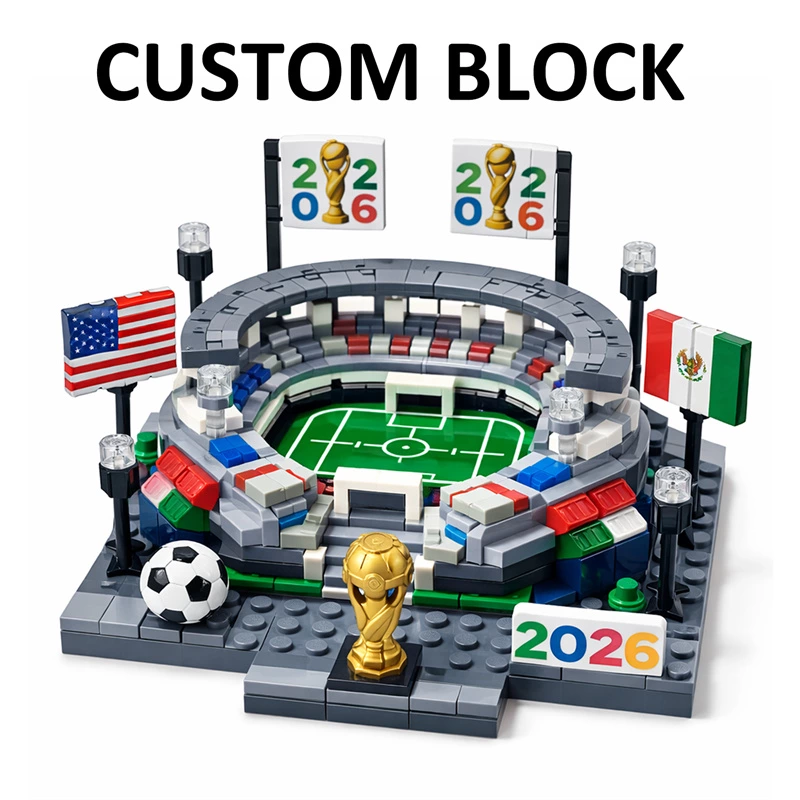
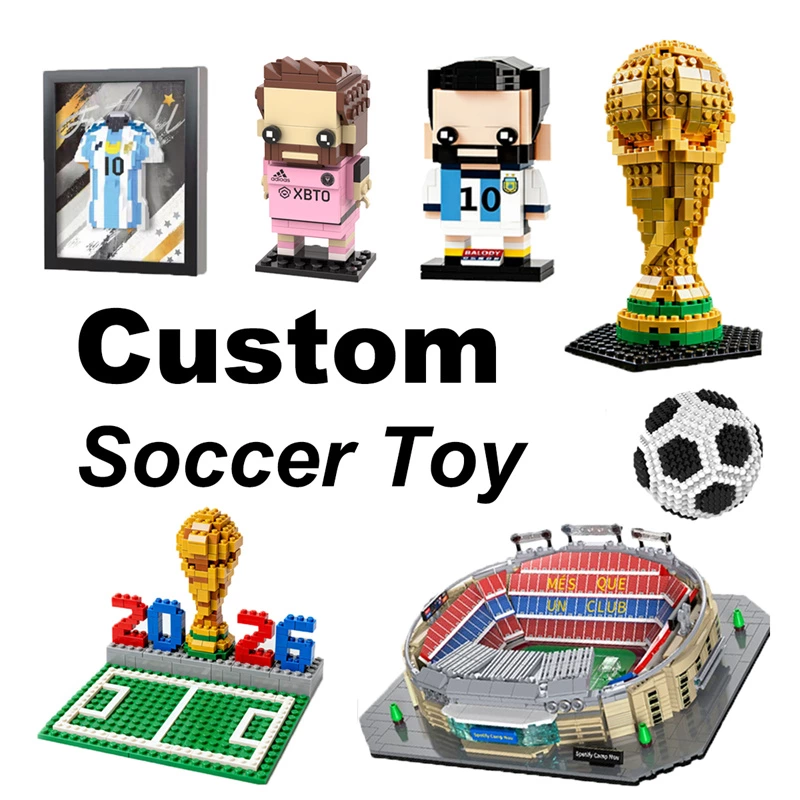
- Museums, sports clubs and companies creating branded models
- IP owners turning licensed characters or locations into building sets
- Education brands requiring a defined learning function
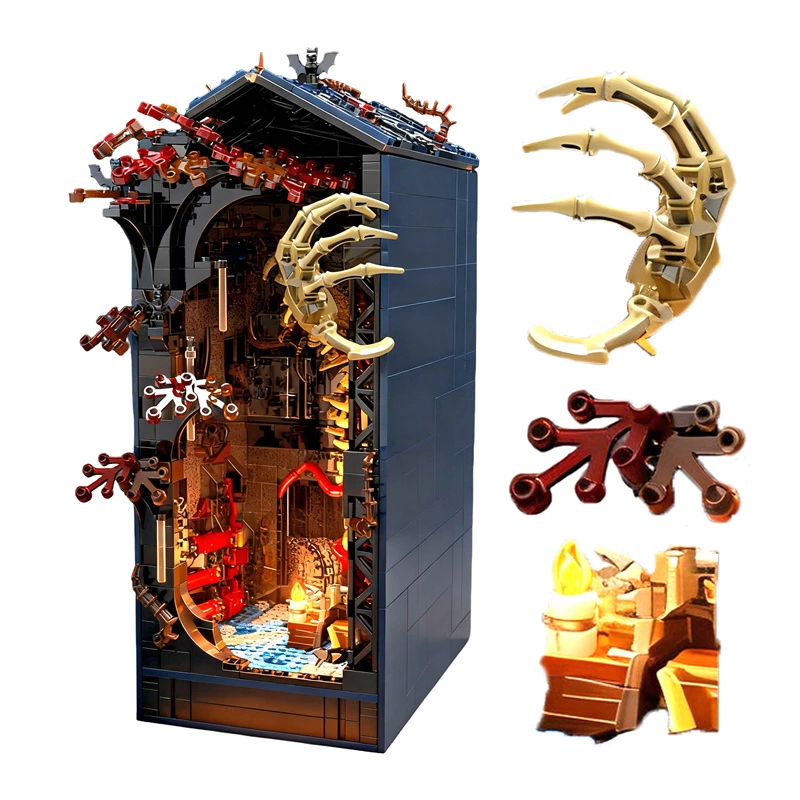
- Projects that need new molds, electronics or unusual mechanical features
OEM does not automatically mean that every brick needs a new mold. A manufacturer may create a unique model from an existing parts library, then develop only the special elements that the design genuinely requires. This distinction has a major effect on tooling, MOQ and timing.
What is ODM building block manufacturing?
ODM, or original design manufacturing, starts with a design already developed by the manufacturer. The buyer selects a model and agrees which elements can be changed-for example the color scheme, printed graphics, product name, instruction cover, packaging or assortment.
ODM is often suitable for:
- Importers testing a new product category
- Retailers that need a faster seasonal assortment
- Ecommerce brands launching under their own label
- Distributors selecting products for a regional market
- Buyers that need customization but do not yet have a complete product design
The important question is not whether a supplier uses the term "ODM." The buyer should ask exactly what is exclusive, what may be sold to other customers, which files can be changed and who owns the original design.
OEM vs ODM building blocks: direct comparison
| Decision factor | OEM | ODM |
|---|---|---|
| Starting point | Buyer concept or specification | Manufacturer-developed model |
| Product differentiation | High, depending on the approved scope | Moderate; usually limited to agreed options |
| Development workload | Higher | Lower |
| New tooling | Possible, but not always necessary | Usually limited unless major changes are requested |
| Sampling | Multiple engineering or appearance rounds may be needed | Often focused on colors, branding and packaging |
| Launch timing | Longer and more variable | Usually shorter |
| Design ownership | Must be defined by contract | Manufacturer commonly retains the base design |
| Best use | Exclusive products and long-term ranges | Market testing and faster assortment expansion |
There is also a middle option: use an existing brick library and production system while developing an exclusive model, instructions and packaging. For many building block projects, this provides meaningful differentiation without the cost of creating every component from zero.
Private label, ODM and OEM are not the same quote
Buyers often use these terms interchangeably, but the factory work can be very different.
| Project level | Typical scope | Main cost drivers |
|---|---|---|
| Wholesale | Existing product and existing packaging | Product, quantity and shipping terms |
| Private label | Existing product with label, logo or packaging changes | Artwork, printing, packaging MOQ and setup |
| Modified ODM | Existing design with color, parts, functions or assortment changes | Sample work, BOM changes, testing review and packaging |
| Full OEM | New model or system developed around the buyer's requirements | Engineering, special parts, tooling, samples, tests and production volume |
When comparing suppliers, make sure every quote is based on the same project level. A low quote for an existing product is not comparable with a quote that includes exclusive design work, custom packaging and compliance samples.
What affects custom building block MOQ and cost?
There is no responsible universal answer to "What is the MOQ?" without a project brief. These factors change the quote:
- Existing parts versus new molds. A model using available bricks generally requires less upfront tooling than a project with new connectors, figures or functional components.
- Piece count and sorting complexity. More unique parts and colors increase purchasing, sorting, counting and packing work.
- Color requirements. Standard colors are different from a custom color match that needs approval and production control.
- Decoration. Stickers, pad printing, UV printing and decorated figures have different setup and durability considerations.
- Instructions. Page count, language versions, paper specification and assembly testing affect both development and print cost.
- Packaging. A label or sleeve is different from a new color box, molded tray, gift box or multilingual retail pack.
- Electronics and moving functions. Lights, sound, motors, remote control and sensors add components, tests and assembly steps.
- Target market and age grade. Compliance requirements affect materials, warning labels, documentation and laboratory testing.
- Order quantity and repeat forecast. Factories need prototype quantity, first-order quantity and expected annual volume to propose sensible options.
- Delivery terms. EXW, FOB, CIF and delivered quotations include different responsibilities and costs.
Ask for separate line items where practical: design, tooling, sample, test, packaging setup, unit price and freight. This makes quotations easier to compare and future design changes easier to evaluate.
A practical OEM building block development process
1. Define the commercial brief
State the target customer, price position, sales channel, destination markets, age grade, theme and planned launch window. A model for a museum gift shop has different requirements from a children's mass-market toy.
2. Confirm the design and IP basis
Provide approved reference files and explain who owns them. If the project uses a character, building, logo, vehicle or other protected design, confirm that the necessary rights are available for the intended countries and products.
3. Select the manufacturing route
Decide whether the project can use existing bricks, needs printed elements, requires new colors or depends on new molded parts. This is where the OEM/ODM decision becomes a technical scope rather than a marketing label.
4. Develop the digital model and BOM
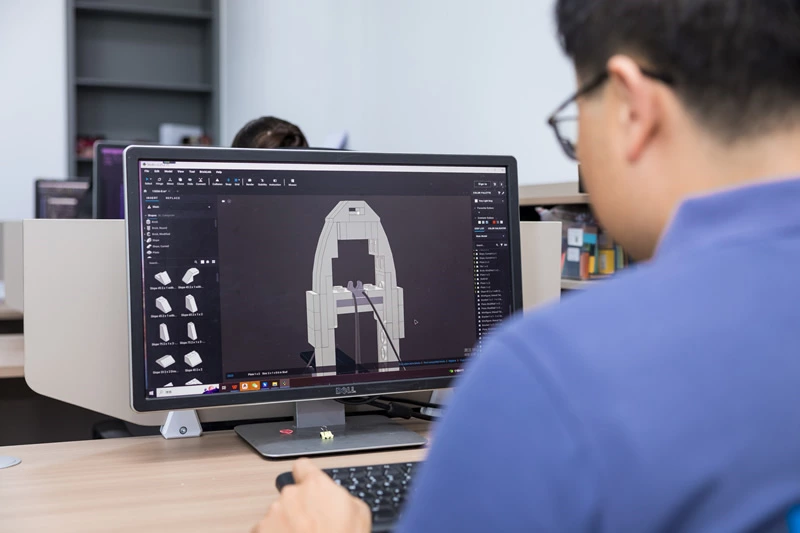
The design is converted into an assembly model and bill of materials. Engineers review stability, building logic, parts availability, appearance and production feasibility.
5. Build and evaluate a sample
The sample should be assembled by someone other than the original designer. Check clutch, stability, color, printed details, missing parts, instruction clarity and the intended user experience.
6. Freeze specifications
Approve the model, BOM, color references, decorated parts, instructions, packaging artwork and quality criteria. Record revisions so later changes do not silently enter production.
7. Complete compliance work
Define testing and documentation according to the target market, age grade, materials and functions. A report for a different model or material is not automatically evidence for the new product.
8. Approve pre-production and mass production
Use an approved sample and signed specification as the comparison standard. Agree on inspection timing, acceptable quality criteria, missing-parts handling and shipment documents before production is complete.
Protect design ownership before development starts
An NDA is useful, but it is not a complete product-development agreement. Buyers should document:
- Ownership and permitted use of the original concept
- Ownership of digital model files and engineering drawings
- Ownership, storage and maintenance of paid molds or tooling
- Rights to packaging artwork and instruction files
- Whether the manufacturer can sell the same or a similar design to others
- Territory, product category and term of any exclusivity
- Treatment of unused samples and confidential files
- Approval responsibilities for licensed IP
Avoid assuming that paying a design fee automatically transfers every right. The commercial agreement should state what is being transferred or licensed.
Quality checks specific to building block sets
A finished model photo does not show whether the set is production-ready. Include checks for:
- Brick fit: connections should hold the model without being unreasonably difficult to assemble or separate.
- Dimensional consistency: variation can create loose or overly tight connections.
- Color consistency: compare molded and printed components under controlled lighting.
- Part completeness: verify counting, bagging and spare-parts rules.
- Print and sticker alignment: inspect position, adhesion and abrasion resistance as applicable.
- Model stability: test likely handling and display conditions.
- Instruction accuracy: confirm every step matches the final BOM and color set.
- Packaging protection: simulate handling risks relevant to the chosen pack and distribution channel.
- Change control: re-evaluate fit or compliance when materials, colors, suppliers or components change.
Building block RFQ checklist
Send the following information when requesting a quote:
- Company, brand and sales channel
- Destination countries
- Intended user and age grade
- OEM, ODM, private-label or wholesale requirement
- Product theme and reference files
- Target assembled dimensions or approximate piece count
- Existing-brick versus new-part expectations
- Required materials, colors, printing and stickers
- Lighting, sound, motor or interactive functions
- Packaging type, languages, barcode and labeling needs
- Prototype quantity, first order and expected repeat volume
- Required compliance tests and documents
- Target sample, launch and delivery dates
- Shipping destination and preferred Incoterm
- IP ownership or licensing status
- Target cost range, if one has been approved internally
If some details are unknown, mark them as open decisions. That is more useful than allowing each supplier to make a different hidden assumption.
What CAYI can support
CAYI supports OEM and ODM building block projects using ABS plastic parts and can assist with digital modeling, prototyping, color matching, instruction design, customized printing and retail packaging. Projects should be reviewed individually because model complexity, new parts, electronics, target-market testing and packaging all affect feasibility and quotation.
Buyers can review CAYI's OEM/ODM building block service, explore its custom building block solutions, or send a project brief through the contact page.
Frequently asked questions
Is OEM always more expensive than ODM?
OEM usually requires more development work, but the answer depends on the scope. An exclusive model made from existing parts may require less tooling than a heavily modified ODM product with custom components, electronics and packaging.
Can I create an exclusive set without making new molds?
Yes. A unique model, color plan, printed details, instructions and packaging can often be developed from an existing parts library. Exclusivity and production rights still need to be written into the agreement.
What files should I send to a building block manufacturer?
Send any available sketches, CAD or 3D files, photographs, architectural drawings, brand guidelines, licensed artwork and packaging requirements. Also state the target market, age grade, quantity and deadline.
Who owns an ODM design?
The manufacturer commonly owns the base ODM design, while the buyer owns its trademarks and approved brand artwork. Exact rights, modifications and exclusivity should be confirmed in writing.
When should safety testing begin?
Discuss the target-market test plan during product definition, then test the production-representative product after materials, components and age grading are finalized. Significant later changes may require a compliance review.
How do I compare two factory quotations?
Normalize the assumptions. Check whether design, tooling, samples, tests, packaging setup, spare parts, inspection, freight and ownership rights are included. Unit price alone rarely represents the same scope.
Prepare your project for a useful quotation
The fastest way to receive an actionable OEM/ODM proposal is to send a clear brief. Include the target market, product concept, approximate quantity, packaging needs, timeline and any available design files. CAYI can then review whether an existing platform, modified ODM design or full OEM route is the best fit.